
Serbia is on the brink of a significant political transformation after Aleksandar Vučić conceded defeat in Sunday’s snap parliamentary elections, paving the way for the student movement to secure a majority.
Vučić announced that early results indicate the opposition Student List is set to win approximately 135-140 seats in the 250-seat National Assembly, while his party is projected to capture around 105 seats.
This defeat is a significant setback for the Serbian Progressive Party (SNS), which has held power for over ten years. Final results are still pending.
Student List Claims Election Victory
The Student List originated from a movement that protested, occupied universities, and campaigned against corruption.
Initial results from CeSID and Ipsos suggest that the Student List has achieved a majority, with both sources indicating enough seats for the student movement to lead.
The election served as a referendum on Serbia’s political direction, allowing voters to choose between the existing ruling system and the student movement advocating for greater accountability.
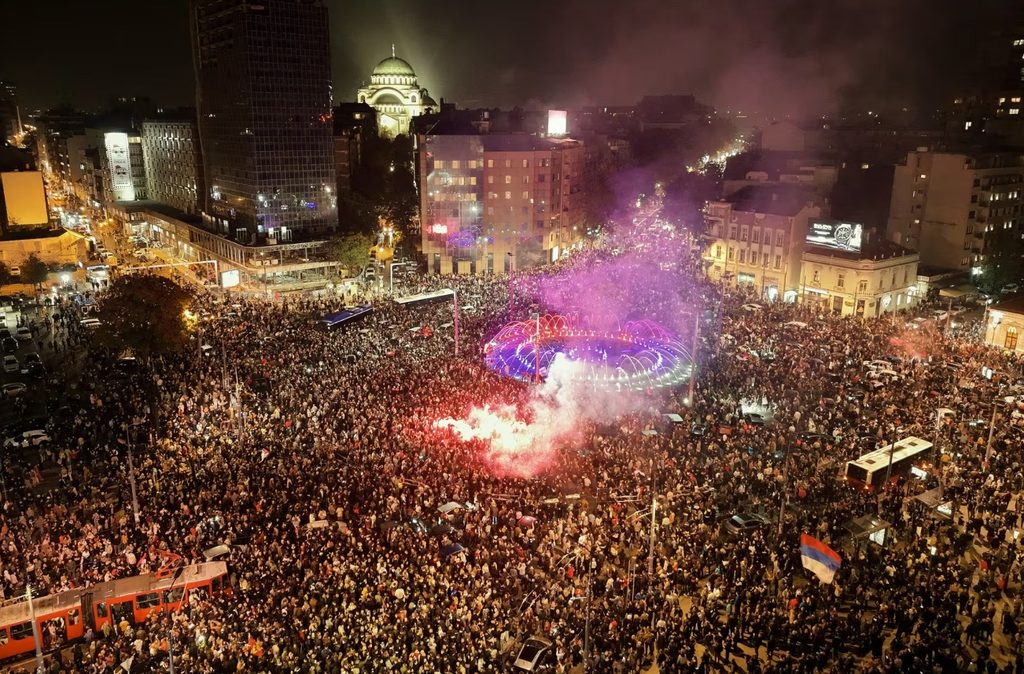
Supporters celebrated in Belgrade and other cities, viewing this as a pivotal moment in Serbian politics.
Student Movement Emerged After Tragedy
The movement began after a canopy collapse at a railway station in Novi Sad in November 2024, resulting in 16 fatalities. This incident sparked public outrage over alleged corruption.
Students called for accountability regarding the deaths and demanded more transparent investigations. What began as a student protest evolved into a significant challenge to the government.
These protests developed into one of Serbia’s largest political movements in recent years, culminating in the formation of the Student List political party.
The movement attracted support from those advocating for stronger institutions.
Set back for Vučić’s Political Influence
Since becoming Prime Minister in 2014 and President in 2017, Vučić has been a central figure in Serbian politics. The SNS has been in power since 2012.
He stepped down as President in September 2026, aiming to reclaim his position as Prime Minister. This parliamentary election was crucial for him.
Vučić has faced criticism for undermining democratic institutions, pressuring independent media, and consolidating his political power. However, supporters argue that he has brought stability to Serbia.
This election outcome presents a serious challenge to the existing political framework in Serbia.
Record Voter Turnout
Sunday’s election saw unprecedented participation, with estimates indicating around 70% voter turnout, marking the highest level since the fall of Yugoslavia in 1992.
The election was highly anticipated, following a tense campaign. Election monitors, civil society, and European officials raised concerns about fairness, citing issues like biased media coverage, pressure on activists, and allegations of violence and irregularities.
Next Steps After the Election
Despite Vučić’s concession, crucial actions lie ahead.
The Student List now faces the challenge of fulfilling their promises. Supporters expect progress in anti-corruption efforts, accountability for officials, stronger institutions, and upholding the rule of law.
Transitioning from protestors to governing leaders will present challenges. They will need to make decisions regarding the economy, public services, relations with the European Union, and ties with Russia and China.
This outcome is a significant setback for Vučić and marks a major shift for the student movement. It remains to be seen if the new leadership can meet the public’s demands.