
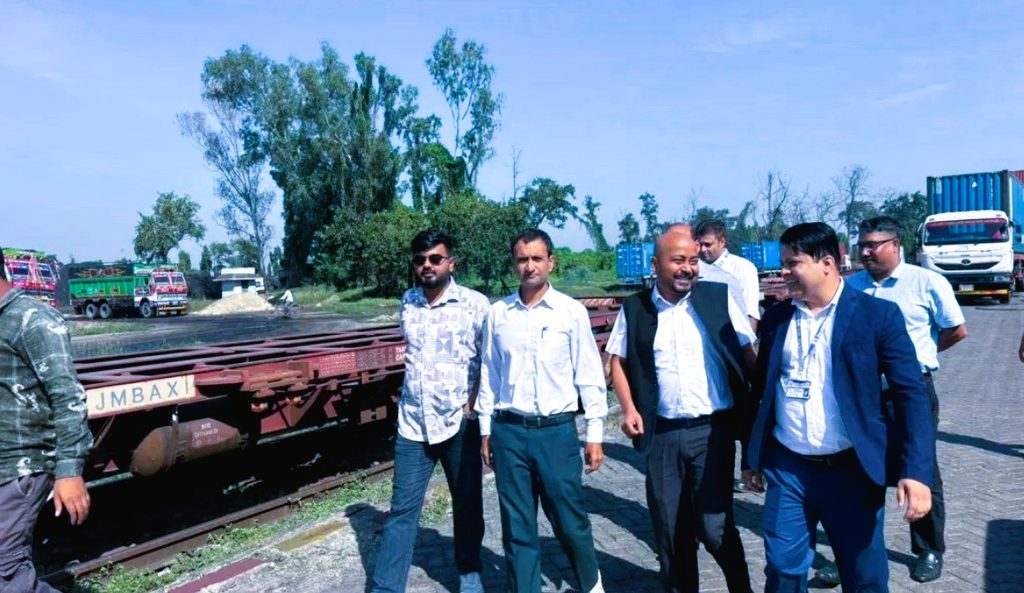
A group of Members of Parliament visited the Birgunj Dry Port and Birgunj Integrated Check Post (ICP) to evaluate infrastructure, management, and cargo processes, with the goal of enhancing railway freight services.
The delegation was led by Ashish Gajurel, Chairperson of the Infrastructure Development Committee, and Arvind Sah, MP from Bara Constituency No. 3.
Officials examined operations and discussed ways to improve customs processes, minimize delays in goods transport, and enhance overall trade services in the country.
These facilities operate under a public private partnership (PPP).
Operators Request 24/7 Gate Operations
Representatives requested that the gates at the dry port and ICP remain open 24/7.
Gajurel urged the Director General of the Department of Customs to facilitate the necessary arrangements.
This change could provide greater flexibility for cargo transport, depending on the actions taken by the relevant authorities.
The delegation also reviewed new management changes following the merger of the Intermodal Transport Development Committee and the Transit and Warehouse Management Company, which now oversees operations.
This visit was intended to evaluate the effectiveness of the new management and identify areas for improvement.
Birgunj Handles an Average of 110 Freight Trains Monthly
On average, 110 freight trains arrive at the Birgunj Dry Port each month.
Around 800 cargo vehicles pass through the Birgunj Integrated Check Post daily.
This highlights the significance of these sites in Nepal’s import/export trade. The dry port is crucial for receiving goods by rail, and the ICP facilitates cross-border transport.
The delegation explored ways to optimize railway usage and improve processes to reduce delays in goods transport.
Streamline Fertilizer Customs Processes
The delegation emphasized the need to simplify and expedite customs processes for fertilizers.
Rail transport is essential for bringing chemical fertilizers into the country, but customs delays can be an issue.
Gajurel called for more organized and efficient processes to ensure fertilizers are processed and transported promptly.
Improved communication among customs, freight, and port authorities can help minimize delays in transporting goods.
Committee Recommends Expanding Public Private Partnerships
Gajurel suggested that the public private partnership model used by the dry port and ICP should be applied to other infrastructure projects.
Effectively leveraging the private sector can enhance infrastructure and public services.
Public private partnerships involve shared responsibilities between public authorities and the private sector. Their success relies on effective management, communication, monitoring, and accountability.
This visit provides a chance to assess the model’s effectiveness at Birgunj and explore potential improvements elsewhere.
Birgunj: A Key Trading Hub for Nepal
Birgunj serves as a vital international trading point, making efficient freight services by rail and road essential for importers, exporters, and the economy.
The recent visit focused on practical strategies to enhance infrastructure use, customs processes, and freight services.
Discussions also covered how the government can collaborate more effectively with customs and the private sector.
Moving forward, the recommendations and requests made can be implemented to improve the efficiency of rail services and freight processes at Birgunj, reducing delays and enhancing overall trade and logistics in Nepal.