
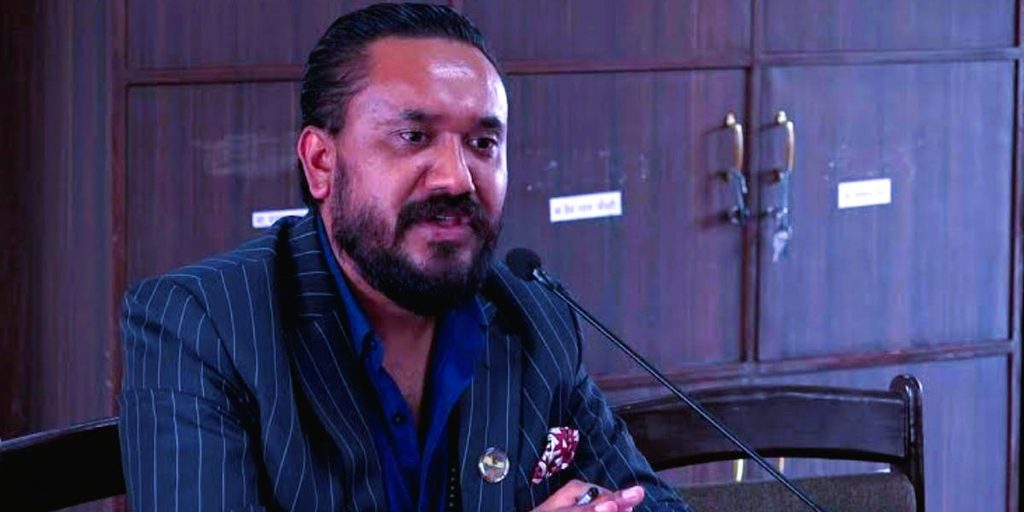
A recording allegedly featuring Rastriya Swatantra Party lawmaker Khagendra Sunar making threats and using offensive language towards a woman has led to calls for a state investigation, despite police stating they have not received a formal complaint.
The recording, shared by media outlets, raises concerns about how authorities handle serious allegations against elected officials, especially when they belong to the ruling party.
Sunar denies that the recording is his, suggesting it may have been created using artificial intelligence or other technology, leaving the authenticity of both the recording and the speaker uncertain.
Police State No Formal Complaint Received
Nepal Police spokesperson Abhi Narayan Kafle informed that no formal complaint about the recording has been filed.
Kafle stated that police would follow legal procedures if a complaint were made.
The absence of a formal complaint has sparked debate about the state’s response. Legal experts and women’s rights advocates argue that public allegations deserve investigation and should not be ignored.
Mohna Ansari, a lawyer and former chair of the National Women’s Commission, urged the government to take the circulated recording seriously and initiate an investigation.
Ansari cautioned that inaction on serious allegations from a public figure could undermine trust in the rule of law and suggest that influential individuals receive special treatment.
She also called on the Speaker of the House of Representatives to address the issue as it involves a sitting lawmaker.
National Women’s Commission Provides Confidential Complaint Option
Krishnakumari Paudel Khatiwada, acting chair of the National Women’s Commission, stated that while they have not received a formal complaint, they take the allegations seriously.
She mentioned that the woman connected to the recording could file a confidential complaint without revealing her identity.
This option aims to protect individuals who may fear exposure, and subsequent actions will depend on the information provided and the commission’s evaluation.
Key questions remain about the recording’s authenticity, the identity of the speaker, and available evidence.
Legal Experts Challenge Reliance on Formal Complaints
Legal experts have questioned whether the lack of a formal complaint should prevent scrutiny of allegations involving threats or violence against women.
Senior advocate Gandhi Pandit stated that allegations of violence against women should be treated as criminal offenses requiring government intervention.
Gopalnath Yogi, former secretary of the House of Representatives, noted that a lawmaker detained during a police investigation after a complaint would be unable to perform parliamentary duties. He emphasized that an internal party investigation alone would not exempt a lawmaker from their responsibilities unless state authorities initiated an investigation.
These comments highlight the need to differentiate between a party’s disciplinary actions and potential criminal investigations by state officials.
Authorities must investigate and determine appropriate actions according to the law.
RSP Initiates Internal Investigation
As of October 13, with no formal state investigation announced, the RSP is conducting its own inquiry through the Central Disciplinary Commission, temporarily suspending Sunar from public events during the investigation.
Harichandra Bhattarai, deputy head of the commission, stated that evidence collection began on Tuesday, with plans to verify the recording and hear from both Sunar and the woman involved.
The party’s response is seen as an internal disciplinary measure, lacking the depth of a criminal investigation that the state could undertake.
RSP to Reassess Sunar Based on Allegations
RSP General Secretary Bipin Acharya described the allegations as serious and sensitive in a statement released on Tuesday.
The party reaffirmed its commitment to the rule of law, good governance, and public accountability, expressing willingness to cooperate with state authorities.
The allegations, which include inappropriate pressure, threats, and suspicious activities alongside abusive language, have been reported by the woman in the recording.
RSP parliamentary party whip Prakash Chandra Pariyar stated that the party would not defend Sunar if investigators confirm the recording’s authenticity and his involvement.
The party’s statements will be scrutinized for accountability, especially since government authorities have yet to initiate an official investigation.
Sunar Willing to Cooperate but Denies Recording Authenticity
Sunar has expressed readiness to cooperate with investigations from both the party and government agencies.
In a video posted on social media, he stated he is willing to answer public questions and accept consequences if any wrongdoing is proven.
However, he denies that the voice in the recording is his, suggesting it may have been fabricated using artificial intelligence or other technology.
His denial and willingness to cooperate do not address the core issue of authenticity. Independent verification of the recording and evaluation of other evidence will be crucial in establishing the facts.
Accountability Depends on Fact Establishment
This controversy highlights how political parties and state institutions respond to allegations against their members. The RSP has begun its own inquiry, while police have not received any formal complaints. Rights advocates have called for government action to examine the allegations and ensure the woman can voice her concerns confidentially.
As of October 13, the recording remains unverified, and allegations against Sunar are unproven. The next steps will focus on evidence gathering, the woman’s account, and whether state authorities will launch an official investigation. Addressing the controversy transparently is essential for establishing the facts and maintaining public trust in the rule of law.