
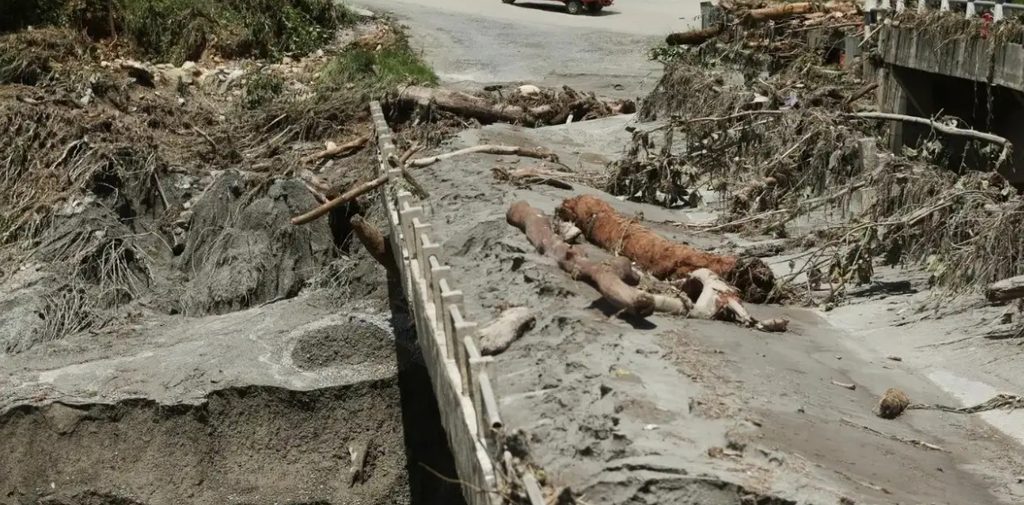
Floods and landslides triggered by relentless rainfall have severely impacted the electricity transmission and distribution infrastructure in Nepal, leading to power outages across various regions. The Ministry of Energy, Water Resources and Irrigation reported that disruptions to transmission lines, hydropower facilities, and electricity loads have collectively affected approximately 1,303 MW of the power system. This figure represents the cumulative impact at different locations and times.
Significant disruptions have occurred in Pokhara, Butwal, Hetauda, and Kathmandu, with western and central Nepal being particularly hard-hit.
Pokhara has been one of the most severely affected areas. A fault in the Kusma-New Butwal 220 kV transmission line resulted in about 200 MW being compromised, while issues with the RauGhat-Dana lines affected an additional 155 MW. Floodwaters have also hampered electricity generation from several hydropower projects, including Kaligandaki, Upper Madi, Super Madi, Sikles-Namrjung, Seti River-Karuwaseth, Upper Dordi, and Modi. In total, more than 400 MW from various projects in Pokhara alone have been affected. Authorities anticipated restoring the New Butwal-Kusma line by 9:50 am.
In Butwal, a fallen tree on the New Bharatpur-New Butwal 220 kV transmission line caused a fault, though the line was reactivated at 9:51 am. The Chapar-Pathlaiya 132 kV line also went offline, resulting in an hour of power cut at the Kawasoti substation. Floods impacted the Hetauda area, affecting around 32 MW in the Mandu 66 kV system and causing fire damage to a CVT at the Bharatpur substation under the Kawasoti-Bharatpur 132 kV line. The disruption further impacted around 20 MW at the Simara substation, approximately 80 MW supplied to industries in Amlekhgunj, Parwanipur, and Birgunj, and about 25 MW at the Kamane substation and nearby industries.
Brief power interruptions were noted in Patan and Teku within the Kathmandu Valley, lasting from 9 am to 9:10 am. In Patan, this was due to simultaneous overloading of the Pathlaiya line and the KL-1 Syuchatar 66 kV line. Emergency measures ensured continued electricity supply after regular systems were disrupted by flooding.
Multiple substations and industrial areas reported load reductions due to flooding and transmission-line issues. At Kawasoti substation, a 20 MW reduction occurred between 8 am and 9:15 am, with a similar 25 MW reduction at Hardi substation. In industries across Sunwal-Mainiya and Butwal, load reductions of around 50 MW started from 6:02 am. The Simara substation saw a reduction of 20 MW from 6 am to 10 am, and around 80 MW was curtailed in industries within Amlekhgunj, Parwanipur, and Birgunj starting at 6:01 am.
The National Electricity Authority (NEA) identified damage to transmission lines and generation facilities along with equipment faults as primary disruption causes. NEA Managing Director Dirghayu Kumar Shrestha stated that technical teams have been dispatched to evaluate damages, identify disrupted supplies, arrange alternatives, and perform repairs. Alternative feeders and available infrastructure are being used wherever feasible. Nonetheless, ongoing heavy rains, floods, landslides, and blocked roads have delayed team deployments in some regions. The NEA plans to mobilize additional resources as soon as access routes become available and has advised consumers to steer clear of damaged electrical structures and fallen wires amid the ongoing crisis.