
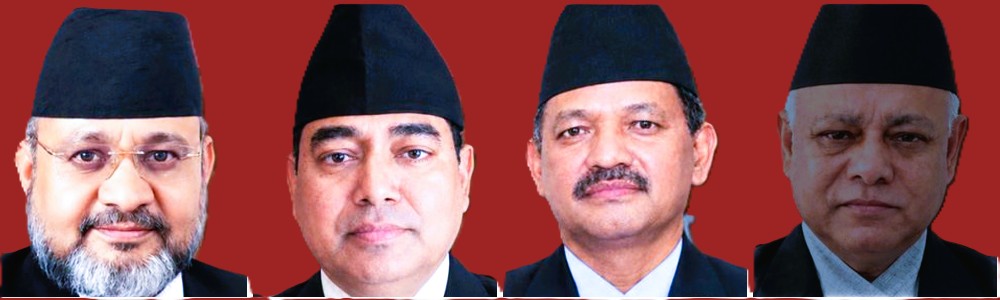
The Parliamentary Hearing Committee has approved four nominees for the Supreme Court judgeship.
The nominees : Dr. Ratna Bahadur Bagchand, Chandra Bahadur Saru, Janak Pandey, and Gokarna Dangi were endorsed by the Judicial Council after thorough hearings.
Following careful consideration of allegations against each nominee and personal hearings on Friday and Saturday, their approval was granted.
All Four Supreme Court Nominees Approved
The committee reviewed the nominees’ work history, experience, and plans to enhance Nepal’s justice system before giving their approval.
The four nominees recommended by the Judicial Council are:
- Dr. Ratna Bahadur Bagchand (Chief Judge of Pokhara High Court)
- Chandra Bahadur Saru (Judge of Patan High Court)
- Janak Pandey (Judge of Hetauda Bench of Patan High Court)
- Gokarna Dangi (Judge of Birgunj Bench of Janakpur High Court)
These names were proposed by the Judicial Council during their meeting on October 6, 2026.
This marks a significant step in filling the Supreme Court vacancies.
13 Complaints Raised Against Proposed Judges
The appointment process attracted attention due to 13 complaints submitted.
The Parliamentary Hearing Committee reviewed these complaints, allowing complainants to voice their concerns.
The nominees then presented their work history, credentials, and plans to lawmakers over two days at Singha Durbar.
Despite the complaints and inquiries, the nominees received approval.
Four High Court Judges Recommended
The Judicial Council recommended these four judges for promotion to the Supreme Court to address existing vacancies.
This recommendation followed a review of eligible candidates from higher courts.
The Judicial Council requires parliamentary approval before the President can officially appoint them as Supreme Court judges.
The committee’s approval has successfully cleared this important constitutional step.
What Happens Next?
Once the Parliamentary Hearing Committee approves them, the nominees can be officially appointed.
According to Nepal’s constitution, the President can appoint Supreme Court judges based on the Judicial Council’s recommendation after they pass parliamentary hearings.
This development is significant for Nepal’s judiciary.
Their appointment will enhance the Supreme Court’s capacity and help fill existing vacancies.
The completion of parliamentary hearings, especially amid the 13 complaints, has drawn considerable public interest.