
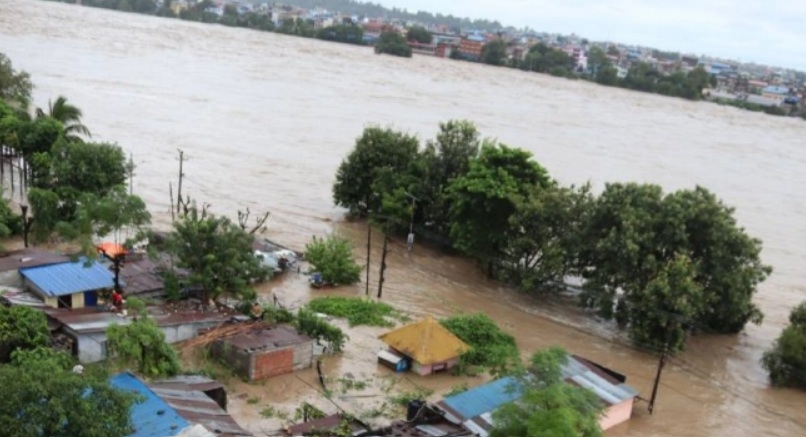
At least 21 people have died in these incidents. Five people remain missing, and another five are receiving medical treatment.
Figures released by the National Disaster Risk Reduction and Management Authority (NDRRMA) show that landslips caused most of the deaths, claiming 14 lives. Floodwaters caused four deaths, while three people died as a direct result of heavy rain.
The NDRRMA also reported that 747 families across the country were affected. A total of 143 homes were completely destroyed, and many others sustained partial damage.
While landslips claimed 14 lives, five further deaths were linked to the torrential monsoon rains: four from flooding and one from direct exposure to heavy rain.
Monsoon Conditions Cause Extensive Infrastructure Damage
A low-pressure system over the Bay Of Bengal brought exceptionally heavy precipitation to central and Western regions. Rainfall reached 455.2 mm above sea level at Dumkuali, Nawalparasi.
Alongside widespread landslips, the downpours overwhelmed physical infrastructure and utility systems across the country, particularly in the power and transport sectors. Flooded transmission towers and collapsed structures caused an estimated 1,013.2 Megawatts of losses across the national transmission network. Hydropower plants with a combined capacity of up to 318 MW were forced to shut down completely.
More than a dozen major highway routes have been blocked or washed away in recent days, severing vital links between the capital and other isolated areas. Landslides near the Mustang region temporarily blocked sections of the Kali Gandaki river. Meanwhile, the hazardous Narayani River rose above its danger marker, reaching 11.94 meters and threatening residents in low-lying parts of Chitwan and Nawalparasi districts.
Search, Rescue, and Relief Operations
Prime Minister Balendra Shah said that Nepal Police, the Armed Police Force, and the Nepali Army were being deployed continuously to conduct search, rescue, and relief operations.
Emergency crews have moved about 3,000 people from high-risk riverbanks and unstable hillsides to temporary shelters. Rescue helicopters have also been sent to badly affected, remote mountain areas, including Myagdi, Sankhuwasabha, and Jajarkot, to evacuate people who are trapped or injured.
The NDRRMA estimates that nearly 9,000 foreign tourists and trekkers are travelling through the country amid the heavy rain. To help keep them safe, the national disaster response management authority has issued advisories asking trekking agencies and independent travellers to avoid high-altitude travel until weather conditions stabilize.
Authorities have also urged people not to take risks near rising rivers or waterlogged hillsides, which remain dangerous.