
Russia’s ruling party, United Russia, is likely to win big in an important parliamentary election this week, strengthening its control over the State Duma. During a tightly managed three-day voting period, which the government promoted as strong support for the war in Ukraine, United Russia reportedly received 57.5 percent of the votes, making it clear that the Kremlin will highlight this outcome as proof of public support for its policies at home and abroad.
This election was the first chance for people to express their views since Russia’s full invasion of Ukraine, but the lack of real political opposition greatly affected how votes were cast.
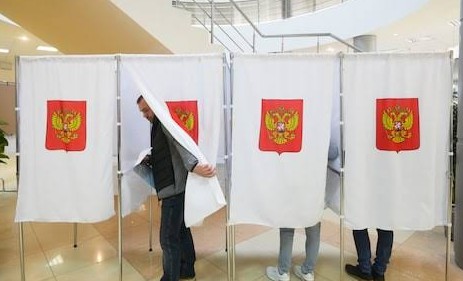
A Controlled Election
Anti-war candidates were not allowed to participate. The Supreme Court decided to remove the Yabloko party from the federal ballot, and many opposition leaders are either in prison or in exile. Support for the government has also been secured by state-approved parties like the Communist Party and the ultra-nationalist LDPR, who consistently support Putin’s key policies on security and foreign affairs.
Opposition members living outside Russia encouraged people to show up at polling stations as a form of protest, but this only led to long lines in some areas. The Central Election Commission (CEC) reported a voter turnout of 56.6 percent, despite claims from certain regions that there were large crowds waiting to vote.
“We’re seeing strong public unity despite the pressure,” said Ella Pamfilova, Chair of Russia’s Central Election Commission.
On election day, Moscow experienced the largest attack on its infrastructure by Ukrainian drones, striking targets around the Kremlin, including an oil refinery that caught fire from debris. There were also reports of casualties in the Moscow region and among occupying forces in Ukraine.
In addition to these attacks, there were reports of cyber and technical problems on election day. Some officials had confirmed injuries caused by drone strikes even before voting started.
Despite these incidents, Russian officials claimed the voting process went smoothly and used the military actions as chances to promote war mobilization messaging.