
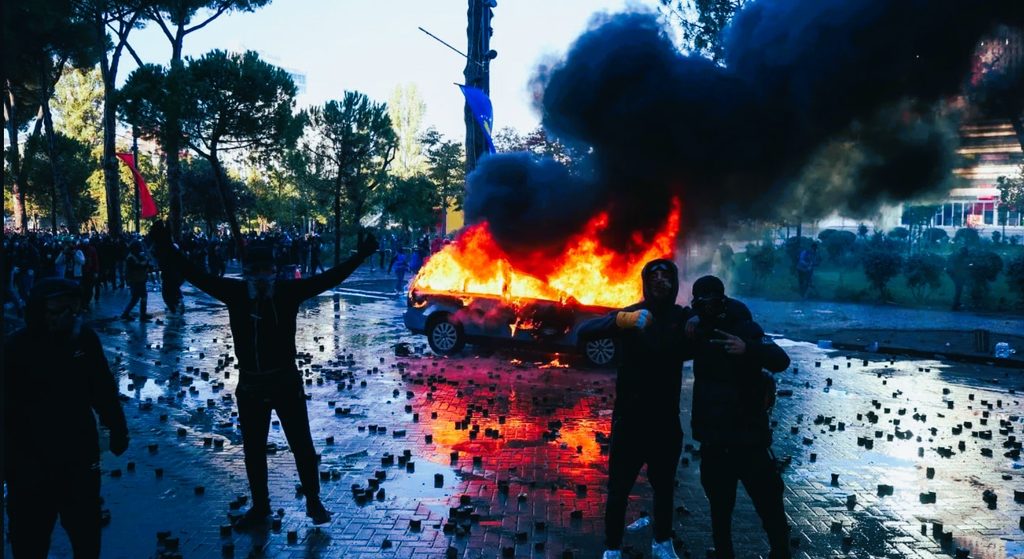
Anti government protests in Albania have reached their seventh day, with demonstrators clashing with riot police in Tirana as calls for Prime Minister Edi Rama’s resignation intensify.
The protests, which started on October 13, involve high school and university students frustrated by corruption, rising living costs, poor university conditions, and limited job opportunities for young people.
On Monday, protesters gathered outside the Ministry of Education, leading to confrontations near the Court of Appeal. Demonstrators reportedly threw stones and fireworks, breaking windows, while police responded with tear gas and water cannons to disperse the crowds.
Clashes also occurred near the Interior Ministry, where protesters allegedly threw stones, fireworks, and petrol bombs at officers, according to officials.
Authorities reported five arrests during Monday’s unrest, with another 15 suspects being sought. Nearly 300 people have been injured in the violence, including 186 police officers.
This unrest has increased pressure on security services and medical facilities, with officials noting that 295 people had been injured before Monday’s latest clashes.
Police stations and government buildings in Tirana have faced attacks, leading to fires and property damage, while protests have also spread beyond the capital.
Student demonstrations and marches have been reported in Lezhë, Vlorë, Elbasan, and Shkodër, with some students boycotting classes to join the protests.
Edi Rama Proposes Dialogue but Rejects Resignation Demands
Prime Minister Edi Rama has reiterated his willingness to engage in talks with protesters, stating his government is open to meeting without preconditions.
However, he has rejected calls for his resignation and announced he will not negotiate with individuals involved in violence.
He urged protest organizers to distance themselves from acts of aggression and to refrain from involving minors in clashes.
This offer for dialogue comes in response to calls from civil society and media organizations for an end to violence, urging political leaders to act with restraint and respect the right to peaceful protest.
The government defends its approach to the unrest, even as critics raise concerns about police actions and the management of demonstrations.
Students Spark Broader Anti Government Movement
While student grievances regarding tuition fees, university conditions, and job prospects initiated the protests, the movement has evolved into a broader challenge to Rama’s government.
Demonstrators are expressing frustration over alleged corruption and the escalating cost of living, coinciding with increased criticism of government decisions and demands for greater transparency and political accountability.
Albanian authorities face mounting pressure to restore order while respecting the right to peaceful assembly.
Human rights advocates are calling for police to use force only when necessary and proportionate, while urging protesters to avoid violence.
As demonstrations continue across Albania, it remains uncertain if the Prime Minister’s dialogue offer will alleviate tensions or lead to further clashes.