
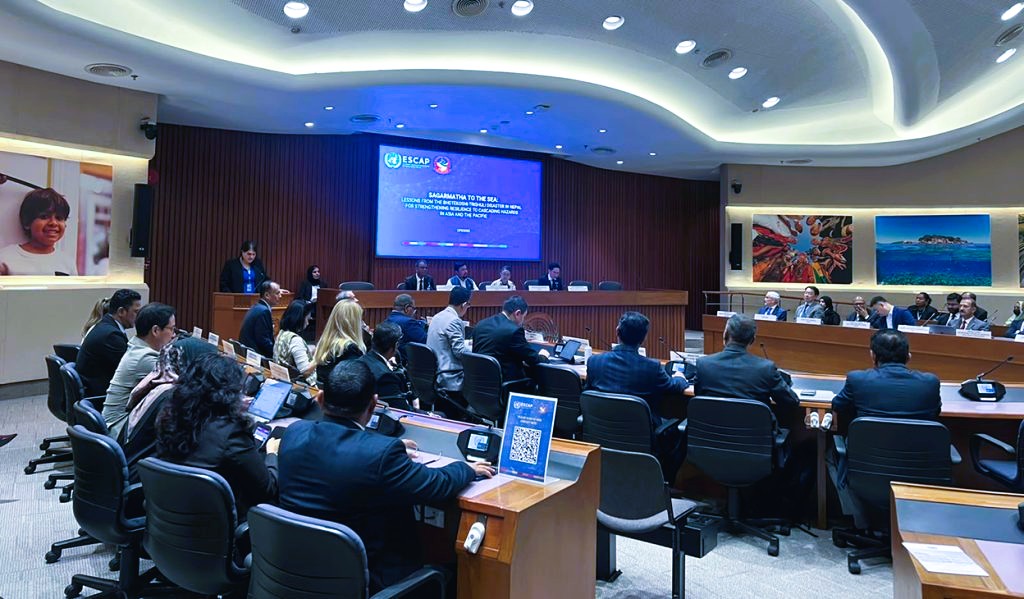
Nepal has gained support for four important proposals to address climate change impacts in the country.
During the high- evel regional dialogue “From Sagarmatha to the Sea,” hosted at the United Nations Economic and Social Commission for Asia and the Pacific (ESCAP) headquarters in Bangkok, ministers from 53 nations backed these proposals.
Biraj Bhakta Shrestha, Nepal’s Minister for Energy, Water Resources, and Irrigation, emphasized the need for international and regional cooperation.
“Climate change knows no borders. Melting glaciers lead to floods, landslides, and other disasters that pose cross border risks. We need global cooperation.”
Nepal’s Four Proposals
The four proposals focus on technology sharing, information exchange, climate funding, and economic sustainability.
- Global Space Technology and Satellite Collaboration
The first proposal advocates for global cooperation in space technology and satellite use. Nepal urges space agencies, researchers, and governments to collaborate on a multi hazard early warning system using satellites, artificial intelligence, and other technologies. This system will help monitor vulnerable areas in the Himalayas, such as slopes, glaciers, and hazardous glacial lakes, allowing for timely disaster preparation.
- Regional Collaboration and Information Sharing
The second proposal aims to enhance collaboration among Himalayan nations for sharing information, research, and early warning systems. Nepal suggests establishing the Himalayas as a hub for regional research collaboration, focusing on monitoring glacial lakes and sharing vital information. This aligns with Prime Minister Balen Shah’s initiative to create a Himalayan Climate Resilience Mechanism to foster cooperation among nations facing similar climate challenges.
- Easy Access to Climate Funding
The third proposal calls for quicker access to funding during climate emergencies. Nepal highlights that monitoring the Himalayas costs millions, but failing to do so could lead to billions in losses. Shrestha insists on establishing a long term mechanism to address climate related damages, supported by adequate funding. The proposal seeks grant based funding for monitoring systems, early warning systems, disaster preparedness, and assistance for vulnerable mountainous regions. It also encourages investment in hydropower and climate-resilient infrastructure.
- Sustainable Economy
The fourth proposal emphasizes investment in a green economy. Nepal calls for increased funding in renewable energy, sustainable agriculture, medicinal plants, and responsible tourism. This approach aims to generate income for mountain communities while safeguarding forests, watersheds, and ecosystems. Shrestha also suggests providing duty free market access for goods from Himalayan communities, linking environmental sustainability with economic growth.
Support from 53 Nations
The four proposals have garnered backing from ministers across 53 nations. The meeting brought together ministers from Asia Pacific countries, United Nations representatives, scientists, and diplomats. This shows strong international support for enhancing collaboration on climate change, particularly among Himalayan nations.
International cooperation is crucial for Nepal, given the rising threats of glacier melt, flooding, landslides, and other climate related disasters. These proposals highlight the importance of providing nations facing severe climate challenges with access to modern technology, funding, and sustainable opportunities.
Overall, the proposals aim to enhance climate monitoring, foster regional collaboration, ensure rapid funding, and develop sustainable economies in the Himalayas.