
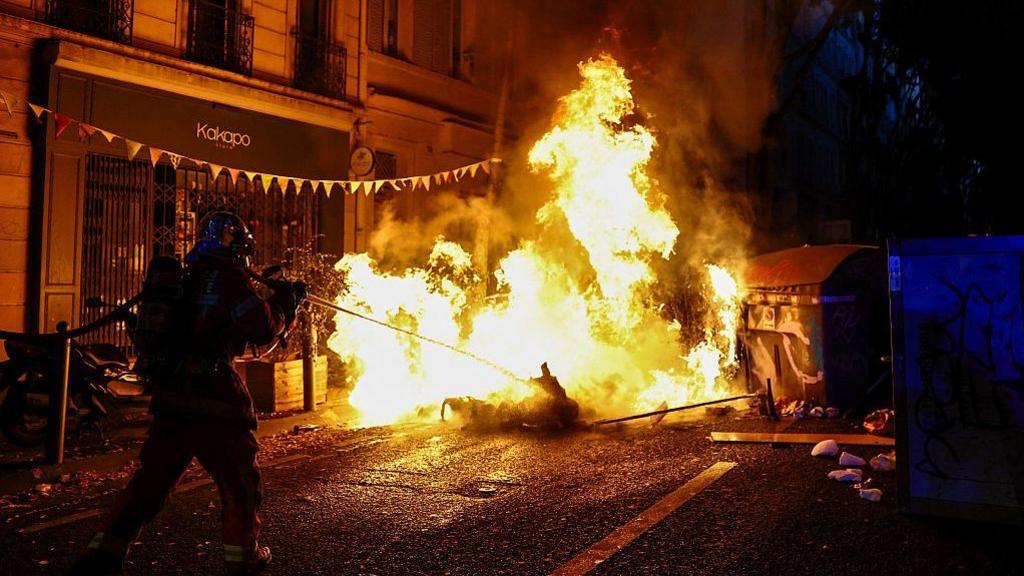
Over 1,300 individuals were arrested in France during nationwide protests concerning rising living costs, education, and inadequate public services.
According to the French Interior Ministry, 1,314 people were detained on October 24, and 53 police officers were injured. Approximately 70,000 police and gendarmes were deployed to prevent widespread looting similar to the previous weekend.
While most protests remained peaceful, some clashes occurred in cities like Paris, Marseille, Lyon, and Bordeaux.
Hundreds of Thousands Join the Protests
The Interior Ministry estimated around 410,000 participants nationwide, while the CGT trade union claimed nearly 800,000 attended. Paris hosted the largest protest, with estimates of 110,000 attendees, though the CGT suggested the number was closer to 250,000.
These protests reflect a growing movement, extending beyond students to include many workers and citizens frustrated with the economy, public services, and inequality.
A total of 289 protests occurred across the country, with many being peaceful, although some areas faced challenges.
Use of Tear Gas and Water Cannons
As protests concluded in Paris, some masked individuals threw objects and fireworks at police. In response, police deployed tear gas, noise grenades, and water cannons.
Authorities focused on groups accused of damaging property and setting up street barricades, maintaining a significant police presence to prevent escalations similar to the previous weekend.
In Marseille, protestors created barriers from trash bins, while Lyon experienced street fires. Tear gas was utilized to disperse crowds in several cities, including Bordeaux and Clermont-Ferrand.
During Saturday’s protestshttps://2daysbulletin.com/almost-1000-arrested-in-protests-across-france-minister-says-as-clashes-erupt/, 53 police officers sustained injuries. Officials noted that the strong security presence helped reduce violence compared to the prior weekend.
Reasons Behind the Protests
The protests began last month, initiated by students demanding better working conditions in schools, including more staff and increased education funding. This issue has expanded to encompass broader concerns.
Students are advocating for additional teachers, well-maintained schools and universities, easier access to higher education, increased grants, and more affordable housing.
Workers and others are protesting against rising living costs, energy and fuel prices, and inequality. Many participants are using these protests to express their wider frustrations with the government.
The protests highlight differing opinions on how France should tackle financial challenges.
On October 23, President Macron met with student representatives and promised changes to university admissions, but students continue to seek further action.
Macron Faces New Challenges
The protests present additional challenges for Macron as his presidency nears its end. His centrist party lacks a parliamentary majority, limiting their ability to pass significant legislation. The next presidential elections are set for 2027.
The government has attempted to ease tensions by engaging with unions and students, but leaders argue that these measures are insufficient.
Political parties have varied responses; the far right National Rally criticized the government for the unrest, while left wing figures have supported protestors and condemned police actions.
The scale and duration of the protests are pressuring the government to address economic issues effectively.
Upcoming Protests Planned
French unions and protest groups have scheduled more nationwide protests for October 31, followed by a nationwide strike on November 5.
Organizers cite widespread anger over wages, living costs, and public services, indicating that this discontent extends beyond just students. The government faces pressure to ensure public safety while preventing further unrest.
Recent arrests indicate a heightened response to the protests, though the numbers are lower than the previous weekend.
With additional rallies on the horizon, France must work to address public frustrations without escalating violence, damaging businesses, or causing injuries to protestors and police.